
Is taking photographs of the night sky difficult? The short answer is no, absolutely not. But with everything, there is always a but.
If you are anything like me, you will want to know the how, the why, and the what if. This is part of the beauty of the hobby. Surely you need lots of expensive equipment? Well, that again is always relative, and again, no, not really.
Yes, you will need at least some form of camera. Open the shutter for a few seconds and bang, you have a smudge of the Andromeda Galaxy. Of course, the first time I did this, I was super excited. But like everything, we always want to do better. Well, I do anyway. I am never really satisfied with the final image. Maybe I should have taken longer exposures, more exposures, tried when the Moon was lower, used a different filter, a different scope, shorter exposures, more gain, etc., etc.
The list goes on, and with this hobby, as you dig in, the rabbit hole gets deeper and more technical. How far you go is up to you, but that is the satisfying aspect of it. It keeps going, you build your experience, and you realise there is always something you could do differently.
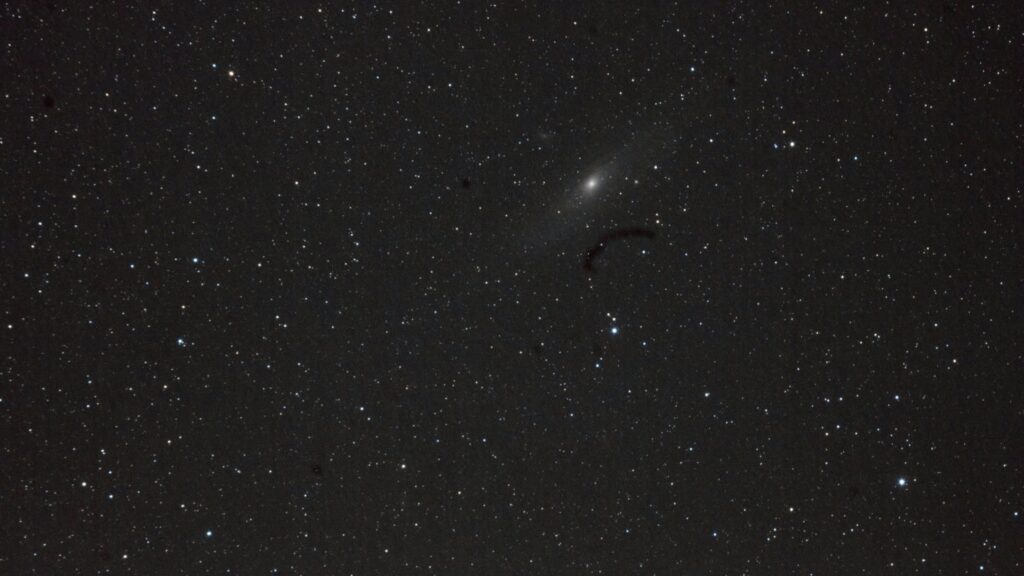
My first attempt at M31 was back in December 2024. Fast forward about twelve months, and I managed to capture my another image of M31.
At the time, I knew very little about the process, calibration frames, processing software, or proper workflows. But I do remember the excitement of seeing that faint, fuzzy smudge of the Andromeda Galaxy appear on my screen. That moment was enough to get me completely hooked.
I then managed to upgrade my telescope to the RedCat 51, saved for a ZWO 2600MC camera, and after a steep learning curve, one year later I managed to produce this image.
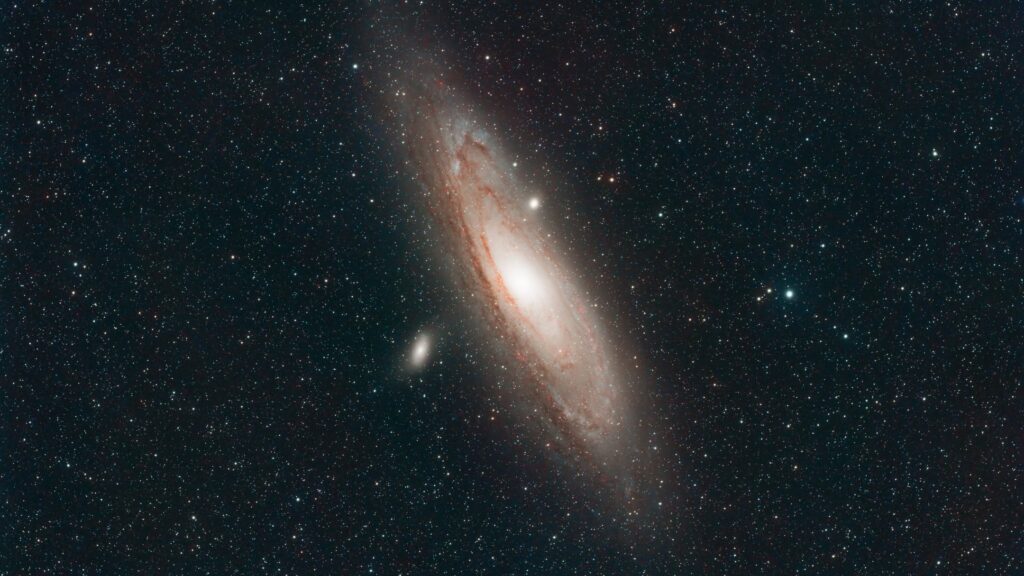
Both images give me the same amount of joy. I’m still learning and still experimenting, but it’s always good to look back and see the journey you’ve made.
What I have learned is that it takes a lot of practice, some failure, and patience. You will need lots of that, especially here in the UK, where clear nights are not always easy to come by.
Then you have the post-processing. This is a huge area and takes time, lots of time. Fortunately, there are lots of tutorials online which will help you, along with some excellent free software to get you through the first stages of processing. And, if you choose to, there is also paid software available.
The choice is yours.